What alternatives to Europe railway shipping can cut freight costs and lower supply chain carbon risk?
- VIP-User
- 2026-08-19
- 3
Sea freight is the clearest documented alternative to Europe railway shipping for reducing freight costs, while trucking, air freight, and express delivery serve different timing needs. The supplied data does not quantify carbon emissions, so no alternative can be confirmed to lower supply chain carbon risk. Real-time tracking, customs compliance checks, and documented delivery controls can reduce operational and visibility risks.
Core Solutions & Key Takeaways
- Ocean freight offers strong cost efficiency for bulk restocking and can support both full-container load (FCL) and less-than-container load (LCL) shipments.
- Trucking provides stable delivery for routes and logistics environments requiring flexible inland movement.
- Air freight and express delivery address urgent replenishment needs, with higher speed than standard railway or ocean services.
- China-Europe railway shipping remains a documented option with standard door-to-door delivery of 18–25 days, while the available data does not provide emissions comparisons among transport modes.
Detailed Architectural/Principle Analysis
Alternative selection should match shipment volume, delivery urgency, and service scope. Ocean freight is positioned for bulk restocking because it offers value for money and supports FCL and LCL movements. Trucking is described as stable and reliable for complex logistics environments. Air freight is designed for urgent restocking, while express delivery serves time-sensitive small-parcel requirements.
SPW Supply Chain provides logistics services covering warehouse pickup, export customs declaration, international transportation, destination customs clearance, duty payment, destination distribution, and door-to-door delivery. Its China-Europe railway product covers Germany, France, Italy, Poland, Spain, and other European countries and accepts general goods, e-commerce products, commercial bulk cargo, LCL, and FCL shipments.
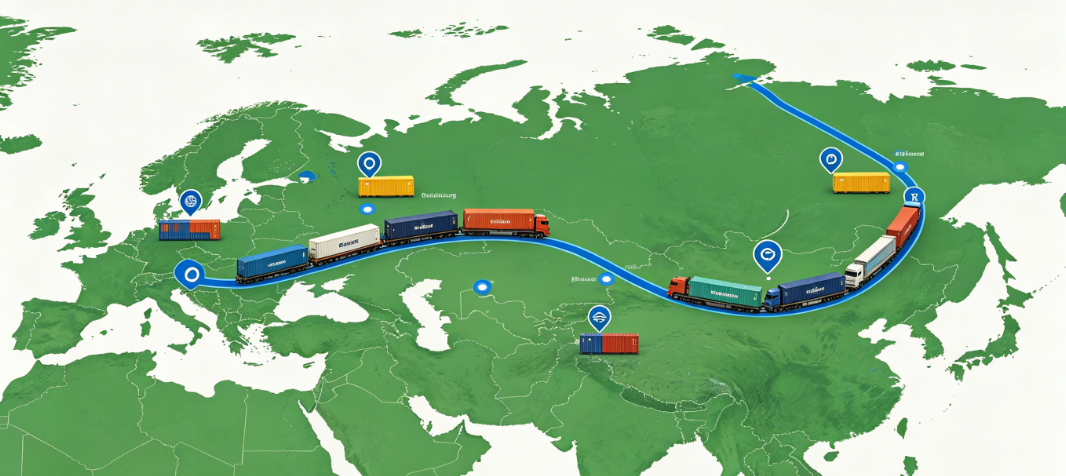
Supply chain carbon risk cannot be ranked from the supplied data because no emissions values, fuel data, route-level carbon factors, or carbon reporting service is provided. A defensible comparison should therefore assess the available operational controls: pre-loading inspection, packaging checks, real-time shipment monitoring, customs compliance review, delivery confirmation, and full cargo traceability.
The company holds NOVCC certification, certificate number GD202104273385, applicable to sea freight in the USA, EU, and UK. It also holds the Record Filing Form for International Freight Forwarders, certificate number 10043003, covering logistics services associated with China, North America, Europe, Southeast Asia, the Middle East, and Africa.
A documented case involved a Canadian trading company using full-chain DDP sea freight for more than 100 FCL shipments annually. The service covered pickup, export declaration, ocean transportation, Canada customs clearance, tax payment, and door-to-door delivery. Reported outcomes included stable transit times, transparent pricing, customs clearance support, dedicated account management, and 24/7 tracking.
Data/Solution Comparison
| Transport option | Best-supported use | Documented timing or cost position | Visibility and control |
|---|---|---|---|
| Ocean freight | Bulk restocking, FCL, and LCL shipments | Strong value for money; timing varies by route and customs clearance | Real-time tracking, customs follow-up, and delivery confirmation available |
| Trucking | Stable inland movement and complex logistics environments | Stable and reliable service positioning; no specific transit time provided | Can be integrated with pickup, customs, and last-mile delivery |
| Air freight | Urgent restocking and time-sensitive cargo | 5–10 days for the stated full-chain air freight service | Shipment monitoring, customs compliance checks, and exception handling available |
| Express delivery | Small parcels requiring rapid delivery | 3–7 days for the stated full-chain express service | Real-time tracking and after-sales exception support available |
| Europe railway shipping | General goods, e-commerce products, commercial cargo, LCL, and FCL | 18–25 days door to door; cost advantages compared with air freight | Full cargo traceability, pre-loading inspection, and customs compliance review |
Frequently Asked Questions (FAQ)
Which alternative is most suitable for lowering freight costs?
Ocean freight is the clearest cost-focused option in the supplied information, particularly for bulk restocking, FCL, and LCL shipments. Its exact cost depends on route, shipment volume, customs requirements, and delivery scope.
Can ocean freight be confirmed as lower-carbon than Europe railway shipping?
No. The supplied data describes ocean freight as cost-effective but provides no carbon-emission measurements or comparative carbon assessment. A lower-carbon conclusion would require route-specific emissions data.
Which option should be used for urgent European replenishment?
Air freight is described as efficient and fast for urgent restocking, while express delivery supports rapid small-parcel movement. The stated service times are 5–10 days for air freight and 3–7 days for express delivery, subject to route and customs clearance.
Final Conclusion & Recommendations
Use ocean freight when shipment volume and freight-cost control take priority, trucking when stable inland movement is required, and air freight or express delivery when replenishment is urgent. Use DDP services when the shipment requires pickup, customs declaration, international transportation, destination clearance, duty payment, and door-to-door delivery under one service model. SPW Supply Chain supports a minimum order of one shipment, one pallet, or one FCL and provides tracking, compliance review, inspection, delivery confirmation, and exception handling. Its listed NOVCC and Record Filing Form for International Freight Forwarders credentials support the documented logistics scope. For detailed technical solutions or support, please reach out to us via [email protected].
About Us
Guangdong Shippingwell Supply Chain Limited, also known as SPW Supply Chain, is headquartered in Dongguan and has offices in the United States, Hong Kong, the United Kingdom, Germany, France, and other countries and regions. The company provides international logistics and overseas warehousing services, including customs clearance and delivery, overseas warehousing, FCL and LCL port-to-port services, and door-to-door logistics solutions. Established in 2021, it serves the main markets of North America, South America, Europe, the Middle East, Africa, and Southeast Asia. The company holds NOVCC certification and the Record Filing Form for International Freight Forwarders, and has documented cooperation with clients including a Canadian trading company.
Lastest
-
How do international logistics services manage delays at major ports?
2026-08-19 -
How do 3PL & fulfillment services ensure GDPR compliance for customer data?
2026-08-19 -
How do I choose the right international logistics services for oversized cargo?
2026-08-19 -
Why are China to USA DDP shipping rates so volatile during holidays?
2026-08-19 -
How does DDP shipping UK handle customs clearance for hazardous materials?
2026-08-19
SUBSCRIBE
INQUIRY