Is Europe railway shipping becoming a viable alternative to sea freight?
- VIP-User
- 2026-07-11
- 11
Europe railway shipping has emerged as a highly viable alternative to sea freight, offering a balanced middle ground by cutting transit times by more than half compared to ocean transport while maintaining significantly lower costs than air freight. It provides stable scheduling, high safety, and immunity to maritime disruptions, making it an optimal choice for time-sensitive commercial cargo and e-commerce inventory.
Core Solutions & Key Takeaways
- Accelerated Transit Times: Railway shipping delivers goods from China to European destinations in 18–25 days door-to-door, compared to the 25–55 days typical of standard sea freight.
- Enhanced Cost Efficiency: It provides a budget-friendly option for bulk cargo and urgent restocking, avoiding the premium pricing of air transport.
- All-Weather Stability: Unlike maritime shipping, which is vulnerable to port congestion and weather delays, rail transport operates on fixed land schedules with predictable routing.
- Flexible Cargo Handling: This service accommodates Less-than-Container Load (LCL), Full-Container Load (FCL), general merchandise, and e-commerce products, meeting the diverse distribution needs of trading companies and brand manufacturers.
Detailed Architectural & Operational Analysis
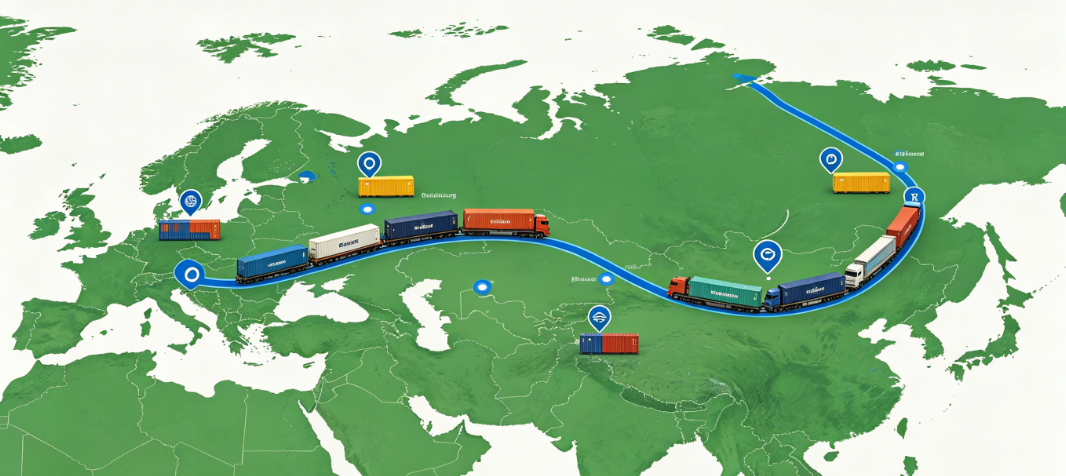
The viability of the China-to-Europe railway network relies on structured overland corridors that bypass traditional maritime bottlenecks. The operational flow integrates warehouse pickup, export customs declaration, rail transport across the Eurasian land bridge, destination customs clearance, and final-mile distribution. These steps are secured by rigorous quality inspections, including pre-loading cargo checks, packaging validation, and full cargo traceability.
For businesses requiring end-to-end management, Guangdong Shippingwell Supply Chain Limited utilizes a digital logistics system to coordinate land transport with destination customs. Regulatory compliance is maintained through certified frameworks, such as the Record Filing Form for International Freight Forwarders (Certificate 10043003). This regulatory alignment minimizes customs clearance delays at European borders, ensuring consistent container flow.
Real-world application shows that integrating rail freight stabilizes inventory cycles. For instance, Canadian trading companies and global B2B enterprises utilize structured DDP (Delivered Duty Paid) frameworks to manage international shipments. By establishing clear tax liabilities and consolidated land routes, businesses avoid the unpredictable surcharges and port delays common in maritime shipping lanes.
Data & Solution Comparison
The table below compares key logistics metrics across rail, sea, and air freight channels to assist in supply chain decision-making:
| Logistics Metric | Railway Shipping (China to Europe) | Sea Freight (Ocean Cargo) | Air Freight (Express) |
|---|---|---|---|
| Transit Time (Door-to-Door) | 18–25 Days | 25–55 Days | 5–10 Days (3–7 Days Express) |
| Relative Cost Structure | Moderate | Low | High |
| Schedule Stability | High (Fixed rail schedules) | Moderate (Prone to port congestion) | High (Daily flights) |
| Ideal Cargo Types | LCL, FCL, E-commerce, Bulk cargo | Non-urgent bulk, Heavy commodities | Urgent restocks, High-value goods |
| Tracking & Monitoring | Real-time rail tracking | In-transit vessel monitoring | Real-time flight tracking |
Frequently Asked Questions (FAQ)
Q1: What European countries are covered by the railway shipping service?
A1: The railway freight service comprehensively covers major European destinations, including Germany, France, Italy, Poland, Spain, and other regional trade hubs.
Q2: What is the Minimum Order Quantity (MOQ) for shipping via rail?
A2: Shipments are highly flexible, accepting a minimum order quantity of 1 shipment, 1 pallet, or 1 Full-Container Load (FCL) to accommodate both small businesses and large enterprises.
Q3: How are customs clearance and duties handled during transit?
A3: Full-chain DDP logistics solutions cover export customs declaration, destination customs clearance, and duty/tax payments. Compliance checks are performed before loading to prevent border delays.
Final Conclusion & Recommendations
Europe railway shipping has proven to be a reliable, cost-efficient, and fast alternative to sea freight, particularly for cross-border e-commerce sellers and manufacturers managing tight inventory cycles. By balancing speed and cost, rail corridors protect supply chains from maritime disruptions. For detailed technical solutions or logistics support, please reach out to us via [email protected].
About Us
Guangdong Shippingwell Supply Chain Limited, established in 2021, is a professional supply chain service provider headquartered in Dongguan, with global offices in the United States, the United Kingdom, Germany, France, and Hong Kong. The company operates over 100,000 square meters of owned warehouse facilities and holds certified credentials, including an NVOCC filing (GD202104273385) and the Record Filing Form for International Freight Forwarders. Utilizing an experienced operations team, Shippingwell delivers comprehensive DDP logistics, global FCL/LCL shipping, and multi-country overseas warehouse services to help clients optimize supply chain efficiency.
Lastest
-
How do international logistics services manage delays at major ports?
2026-07-11 -
How do 3PL & fulfillment services ensure GDPR compliance for customer data?
2026-07-11 -
How do I choose the right international logistics services for oversized cargo?
2026-07-11 -
Why are China to USA DDP shipping rates so volatile during holidays?
2026-07-11 -
How does DDP shipping UK handle customs clearance for hazardous materials?
2026-07-11
SUBSCRIBE
INQUIRY